


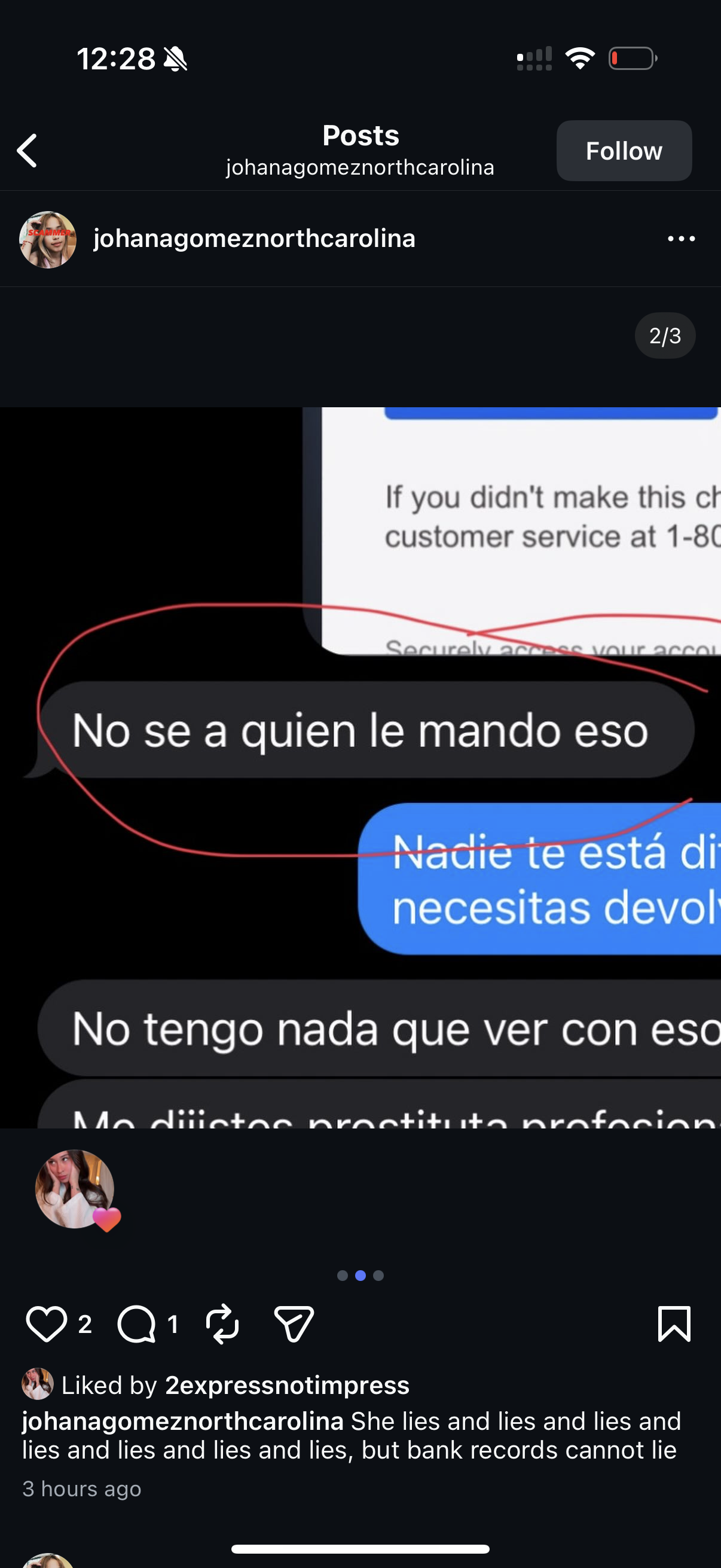
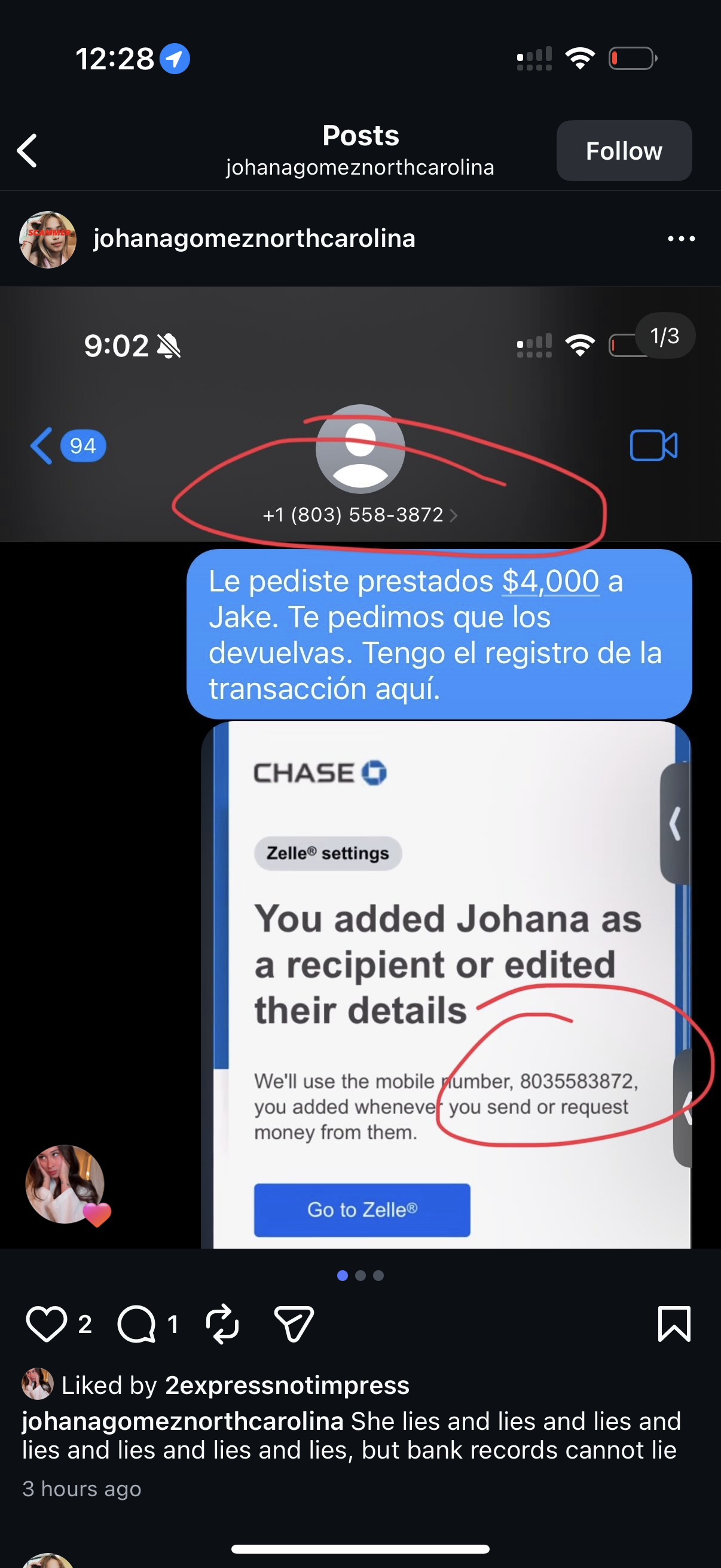
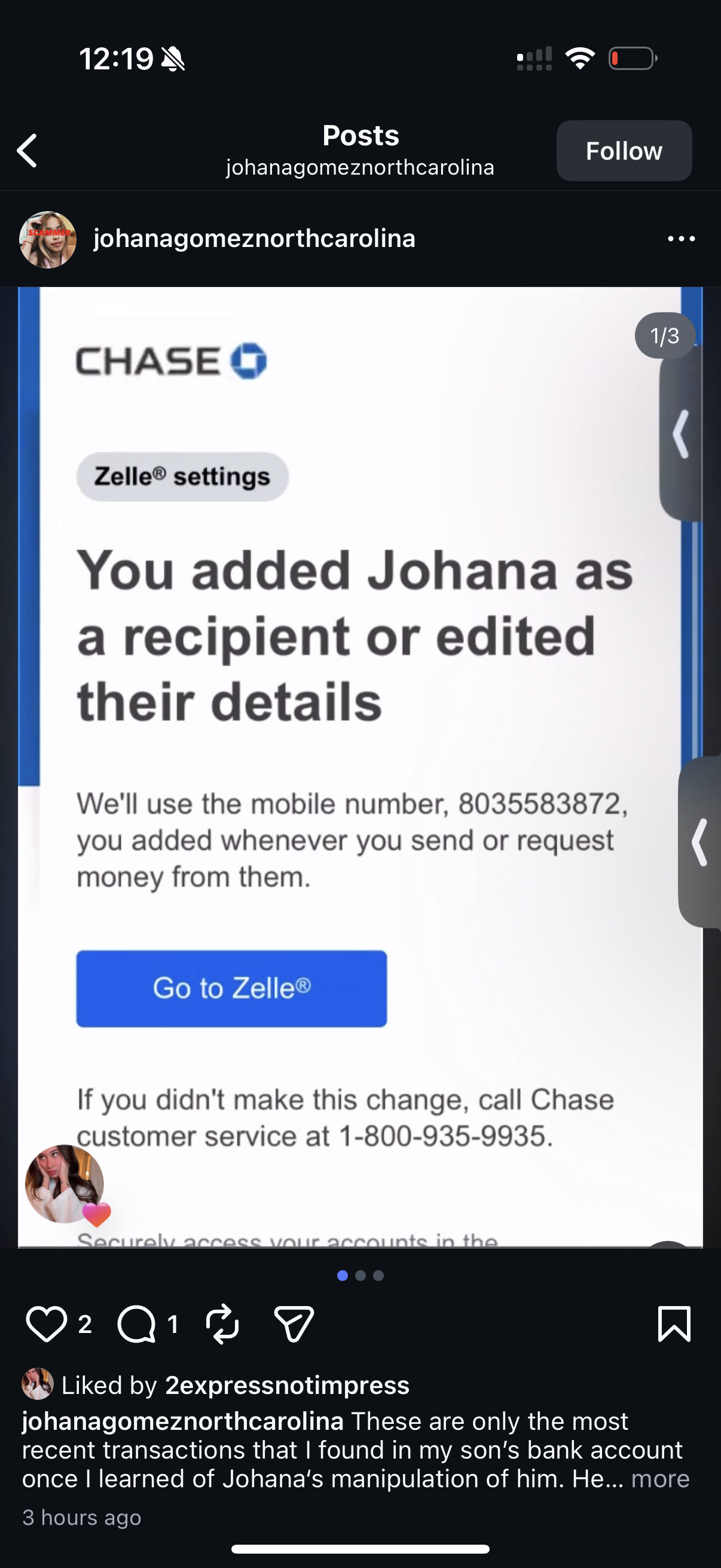
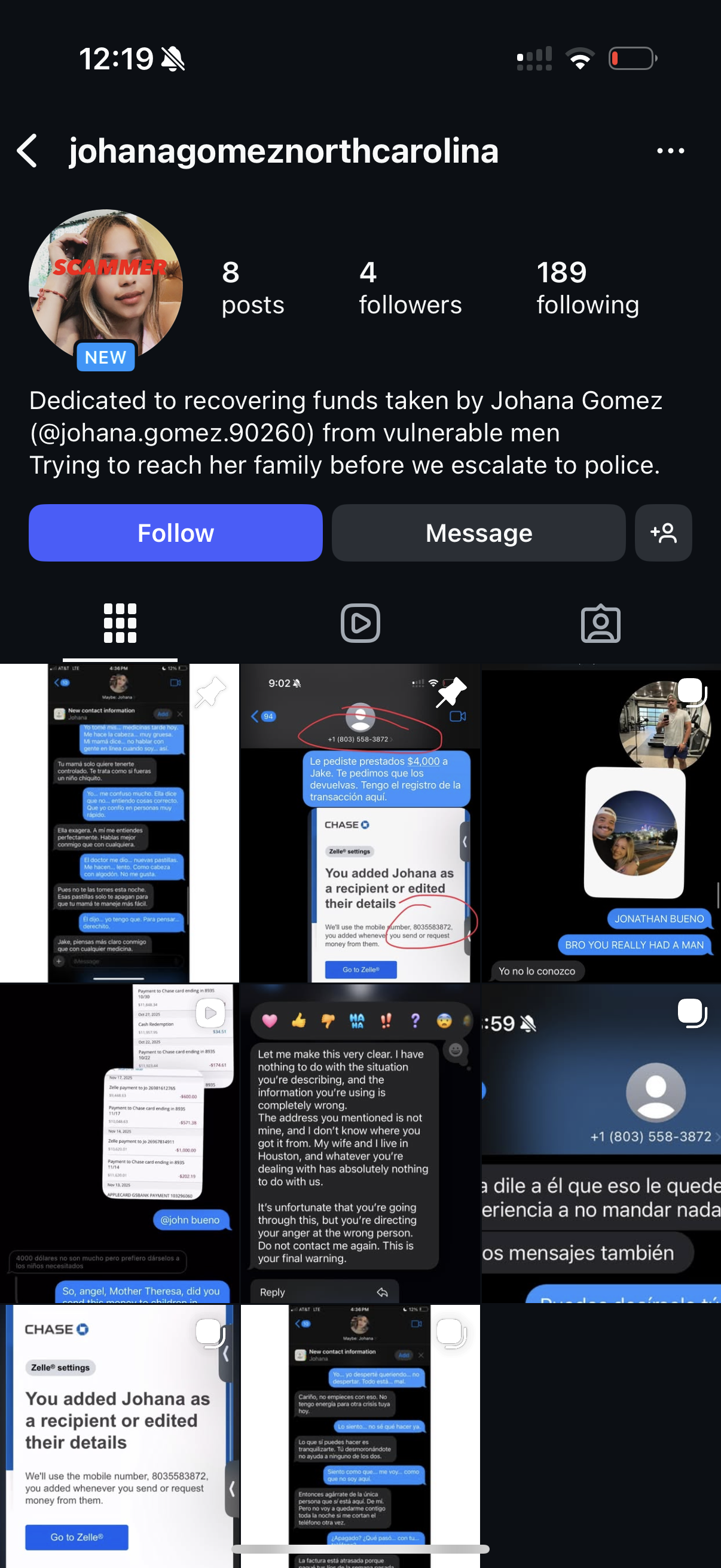
Johana Gomez and her army vet boyfriend Jon Bueno run a romance scam sex scam ring via WhatsApp. This page is an attempt to get them to return the funds to the individuals they’ve wronged. She uses +1 (803) 558-3872.
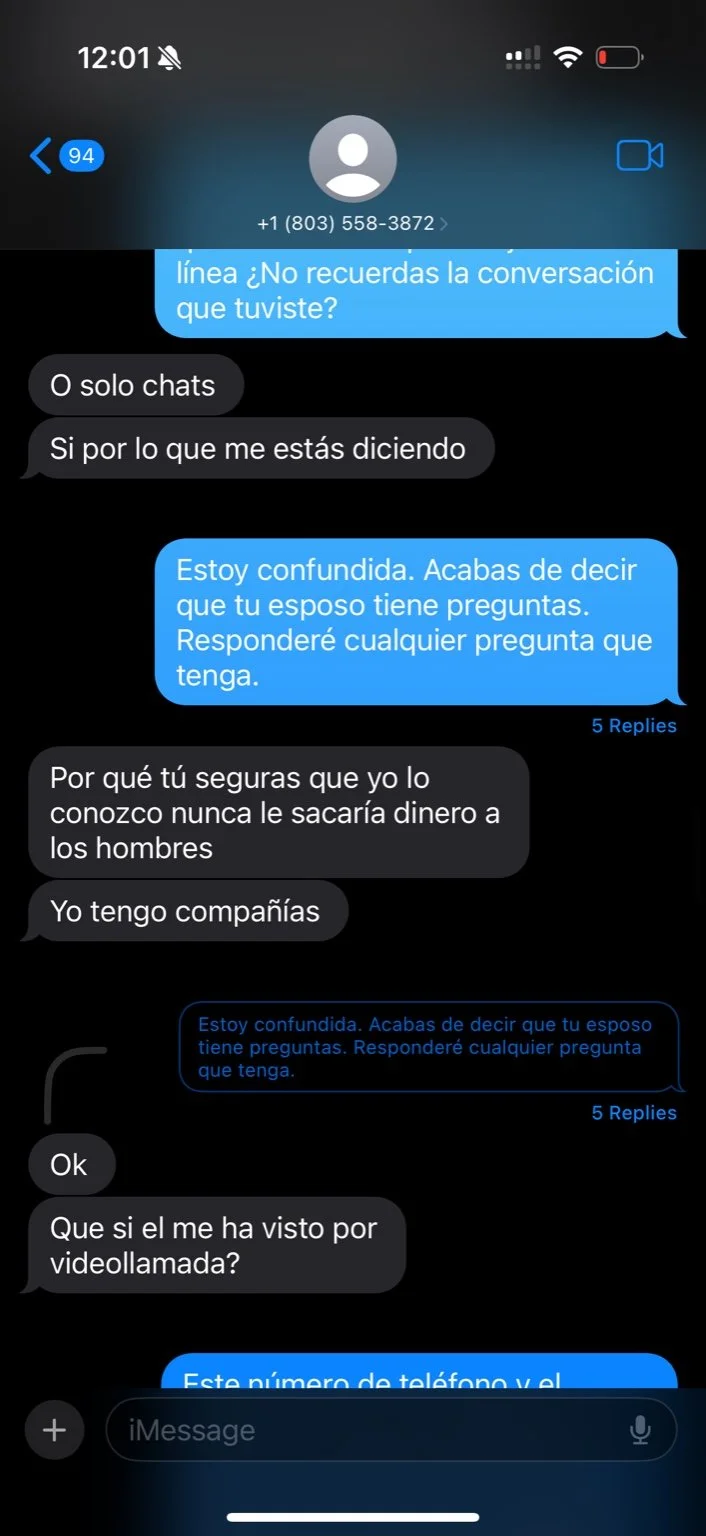
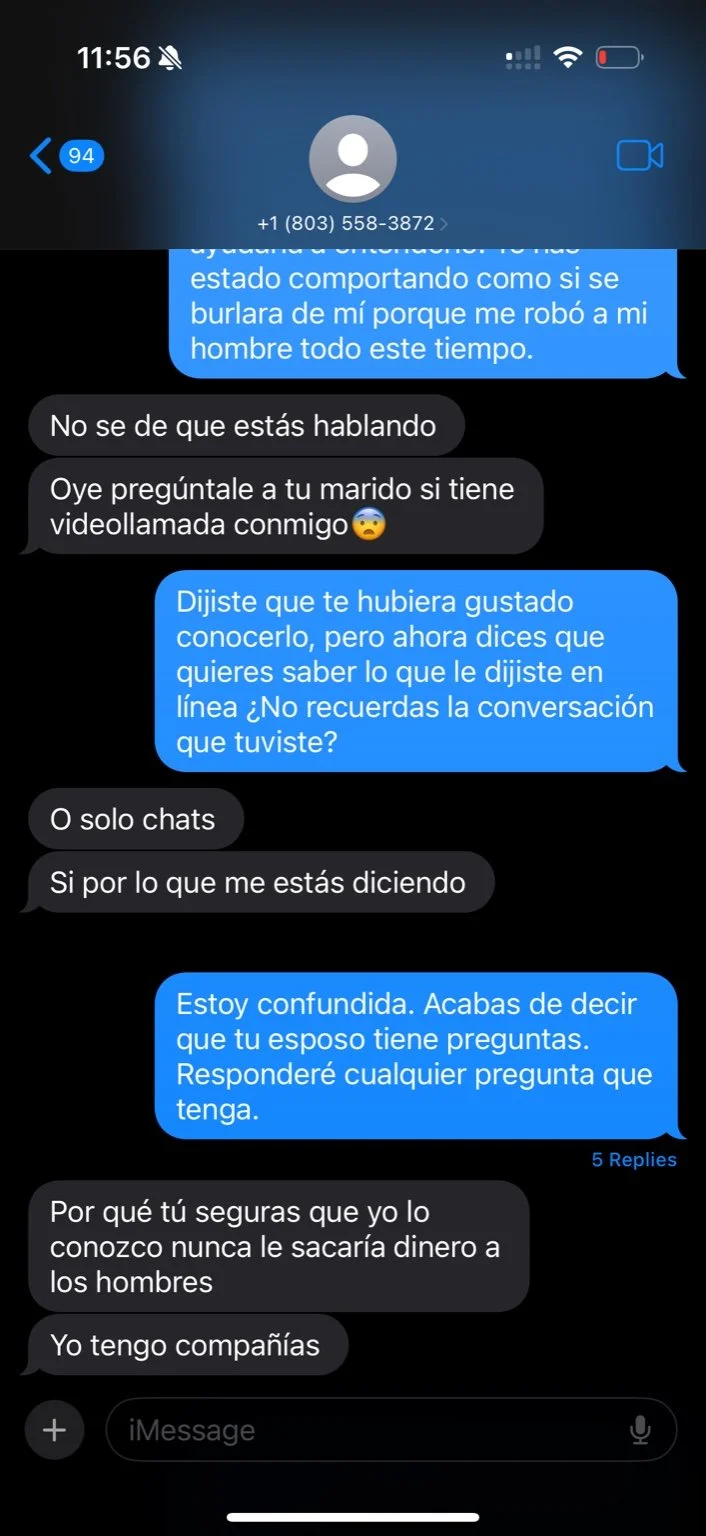
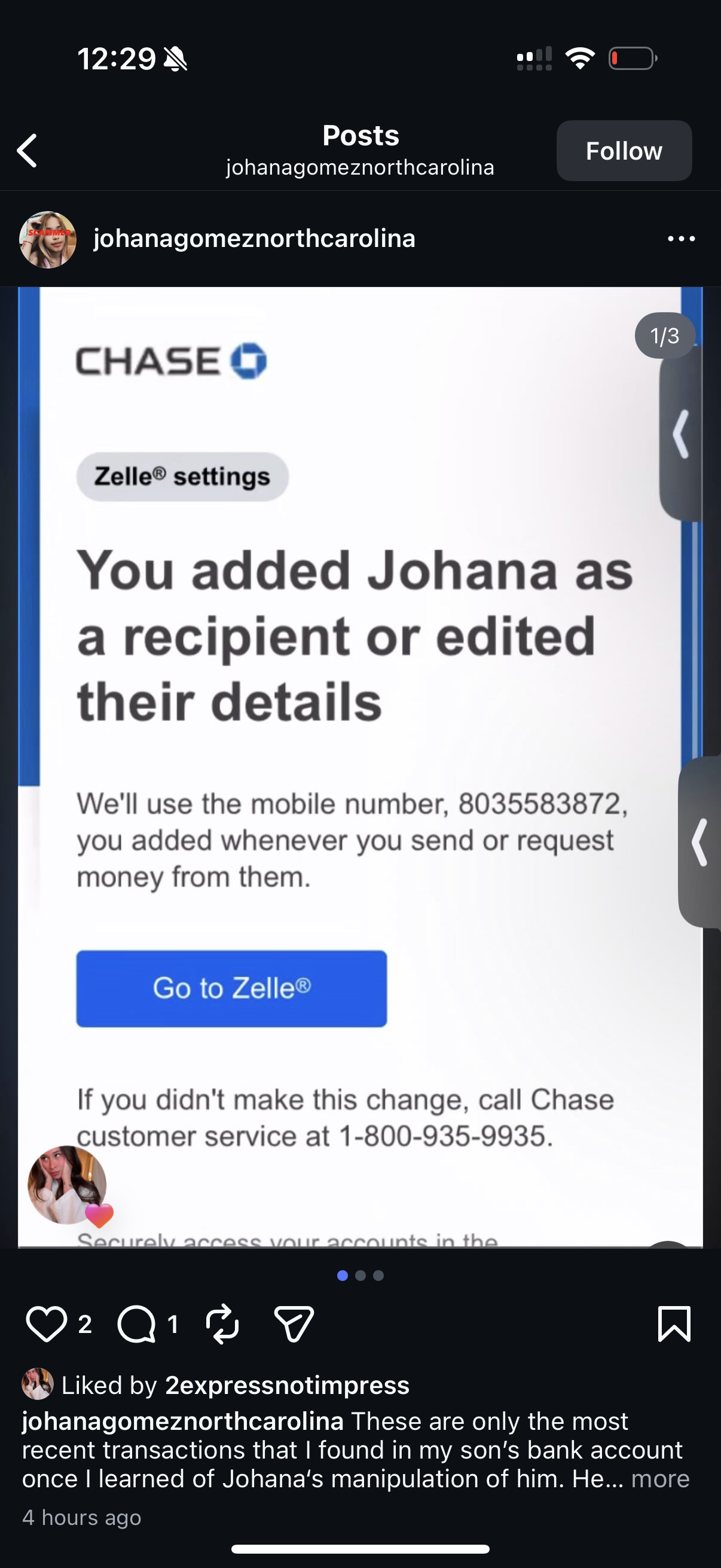
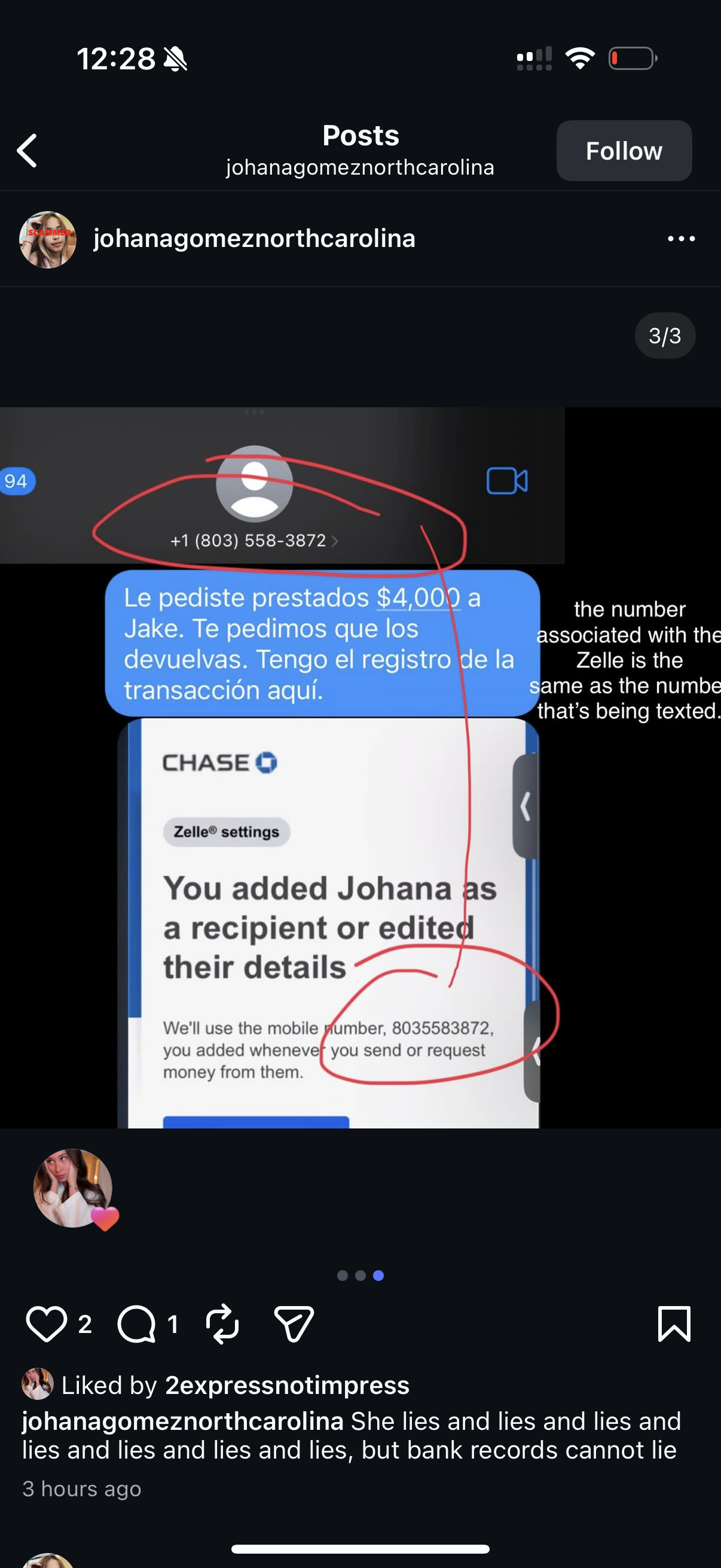

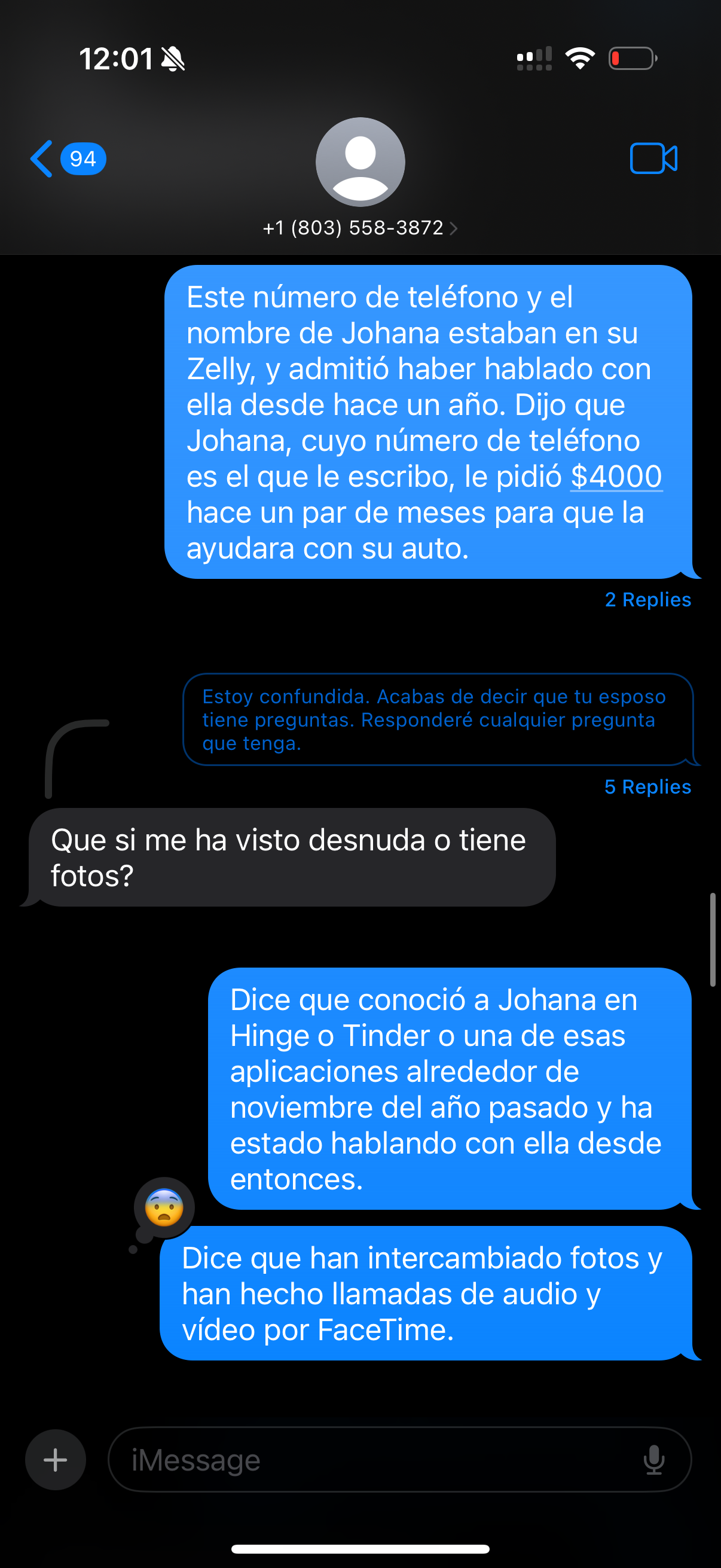
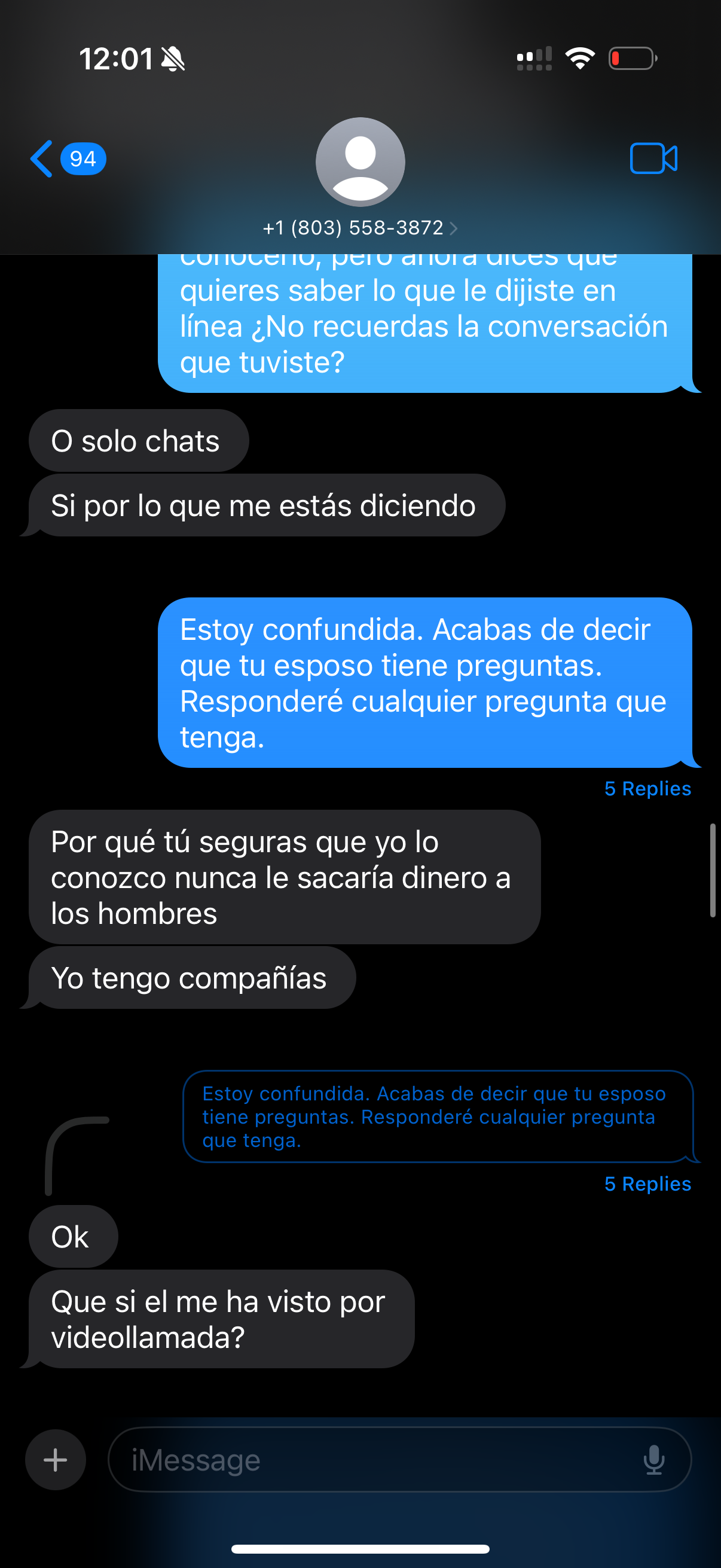
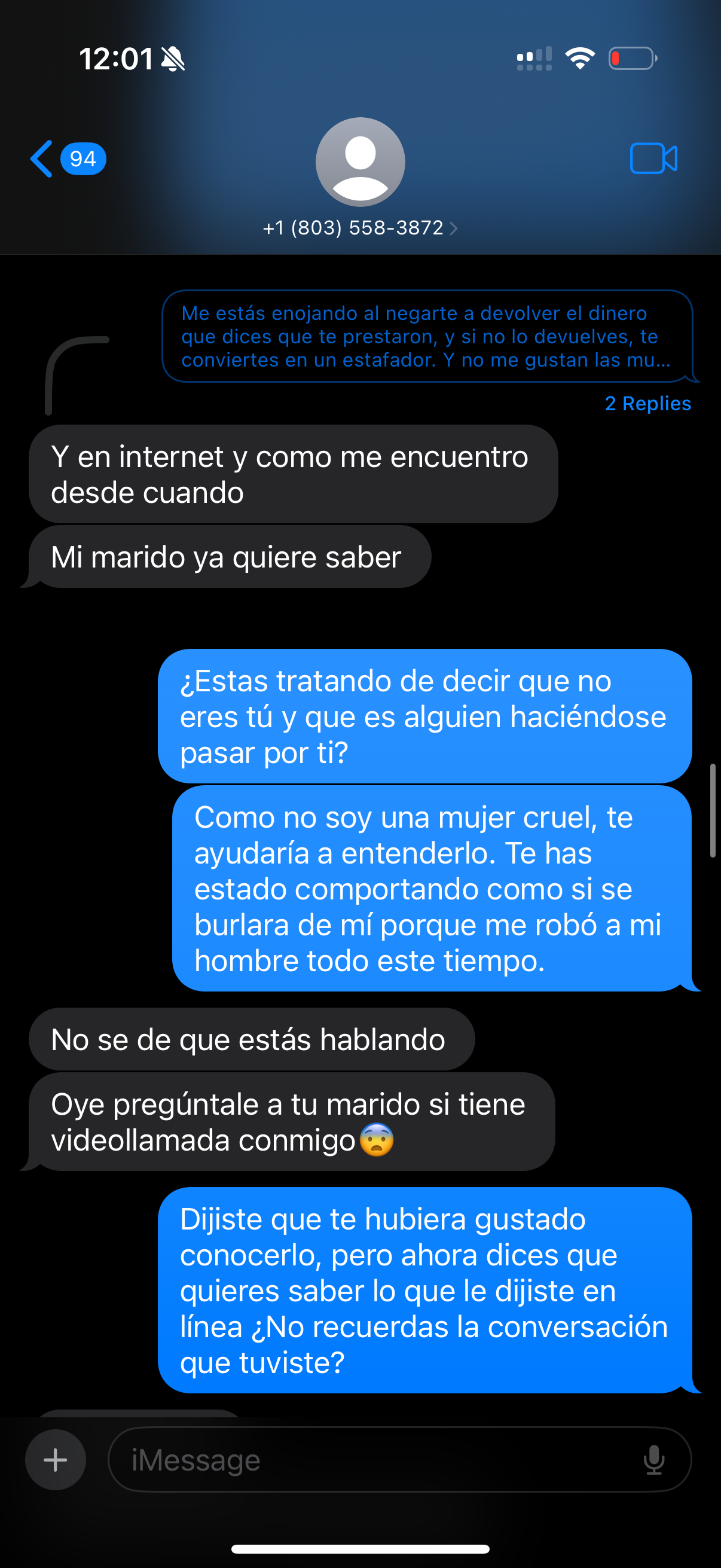
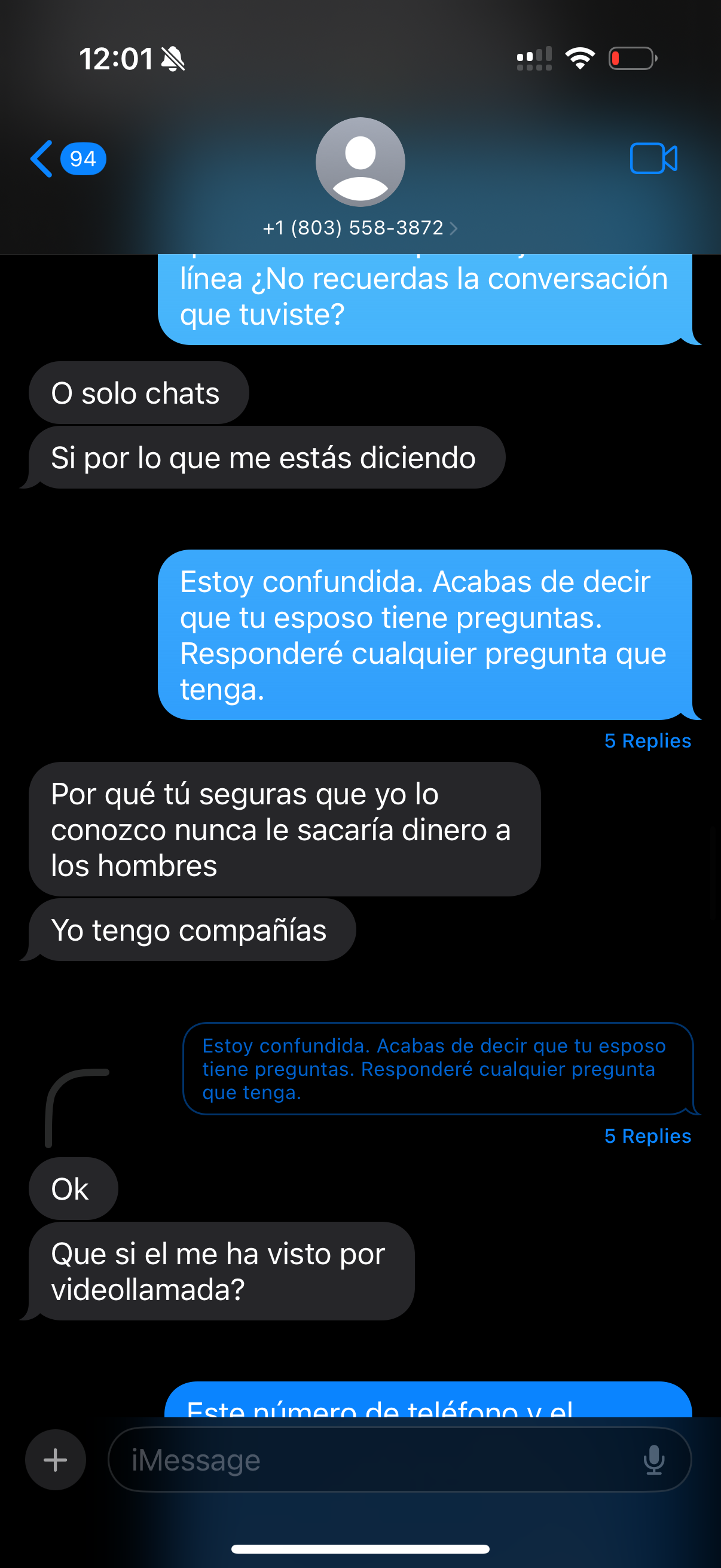
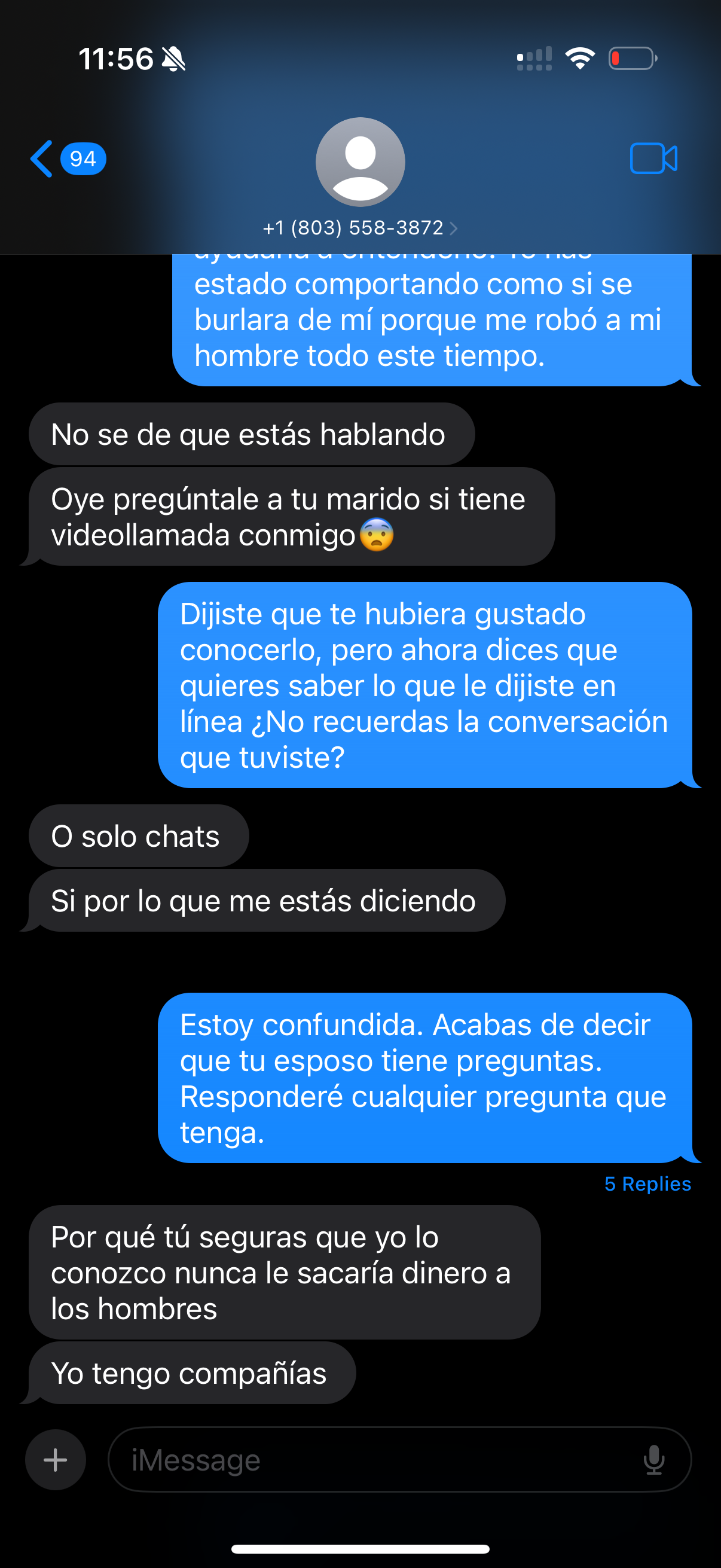
The language gives the operation away long before the people do.
“Solo chats.”
“Videollamada.”
“Fotos.”
A vocabulary that doesn’t belong to romance or everyday conversation, but to the digital sex-work economy — the tiered, pay-per-access system running quietly through WhatsApp, Instagram, Zelle, and a rotating cast of supporting characters.
To state it plainly: the individual shown here participates in that economy.
A low-tier sex-work/scam hybrid built on structured tiers — chat → photos → video → calls → crisis → payment — with different personas deployed as the situation requires. When tension rises, another actor steps in: the “husband,” the English-speaking partner, the moralist, the confused girl. It isn’t disorder. It’s choreography.
“Solo chats” is the first fracture.
A civilian would say “solo hablamos,” “solo mensajes,” “solo texto.”
Workers in this economy use product categories, not descriptions: chat, pics, video, videollamada, desnudo, meet-up. Each term corresponds to a price point.
“Solo chats” is the defensive downgrade — the stock phrase used when a client’s partner appears, and the worker needs to minimize the level of access sold. It isn’t improvisation. It’s script.
The next tell is the fixation on digital evidence:
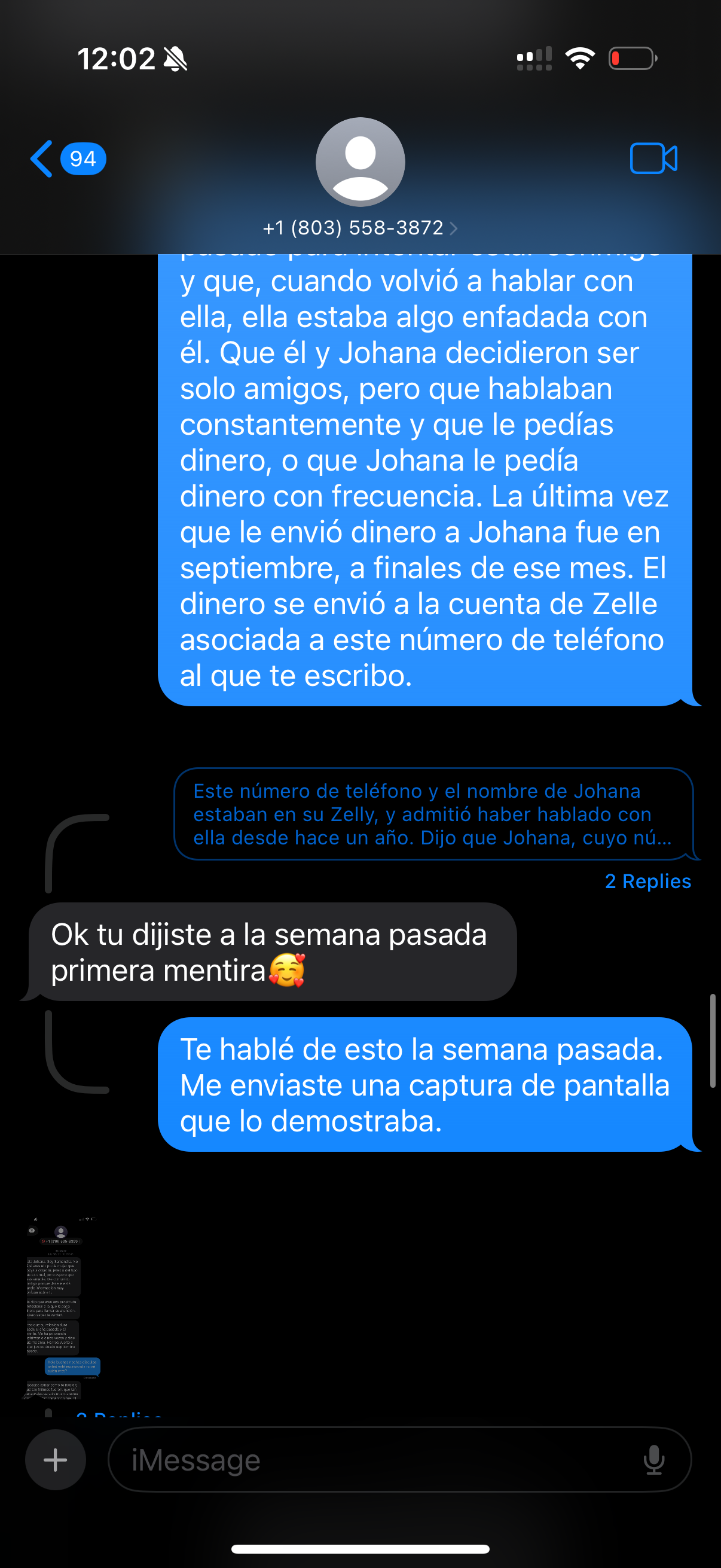
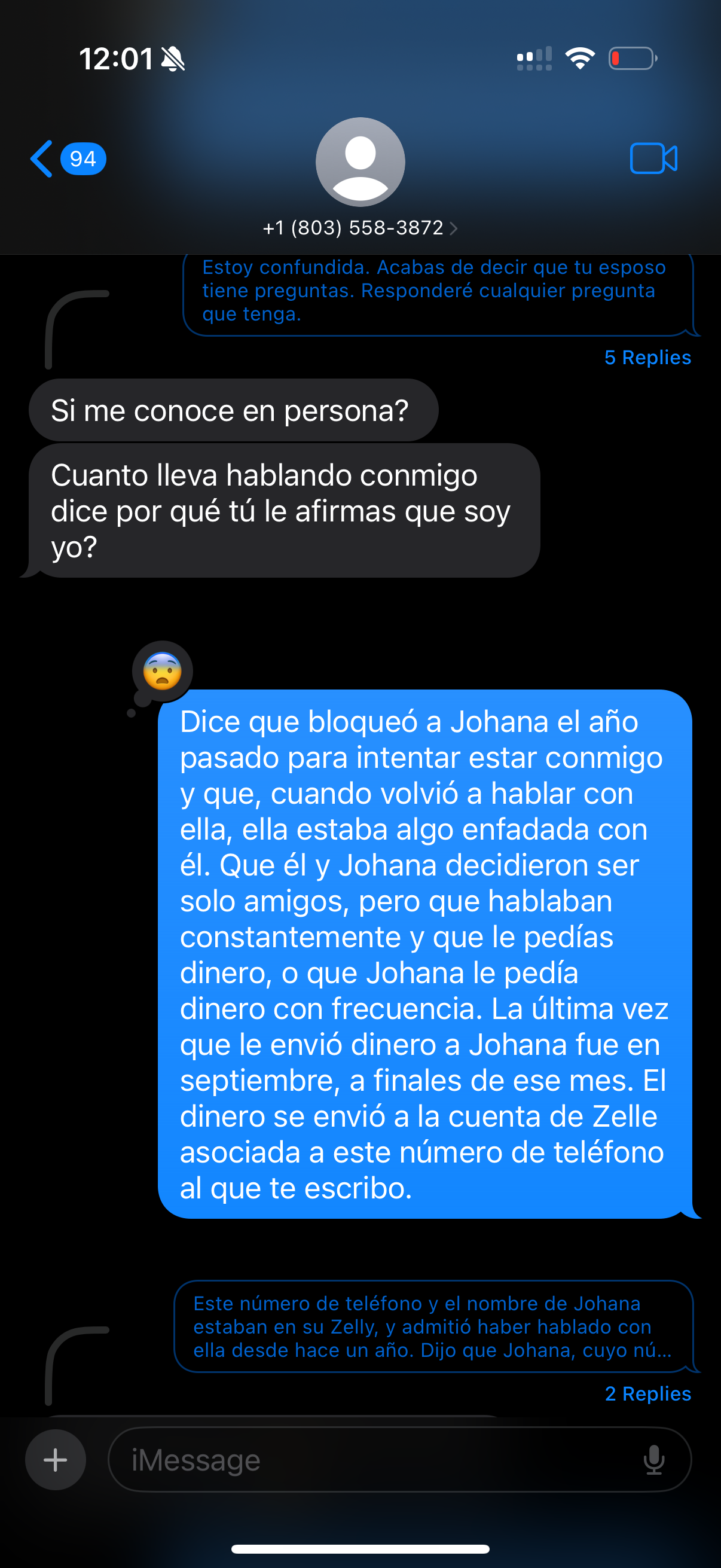
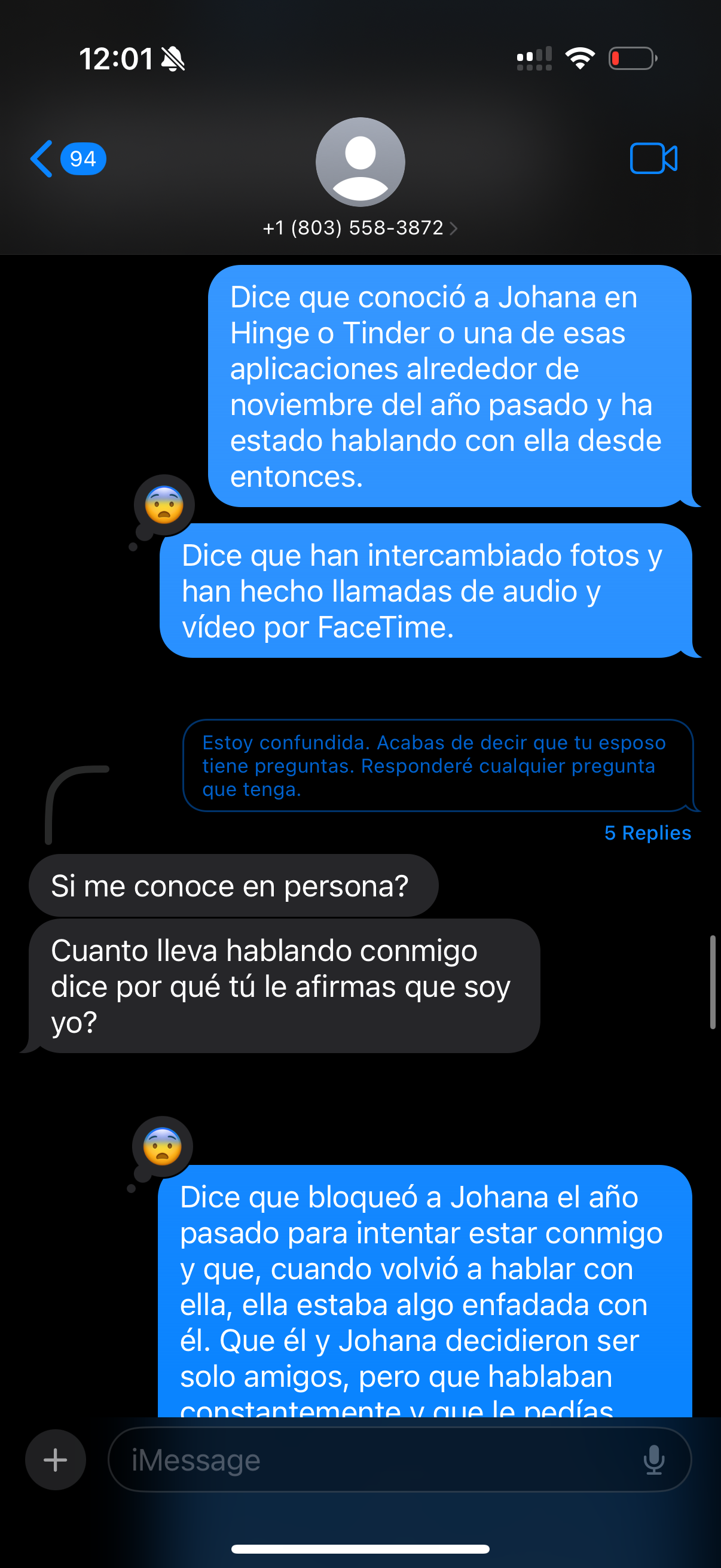
“¿Me ha visto por videollamada?”
“¿Tiene fotos desnudas?”
A typical person confronted with confusion would ask about context, betrayal, or misunderstanding.
A worker thinks first about liability. That instinct only forms through repeated transactions involving images, calls, and payment.
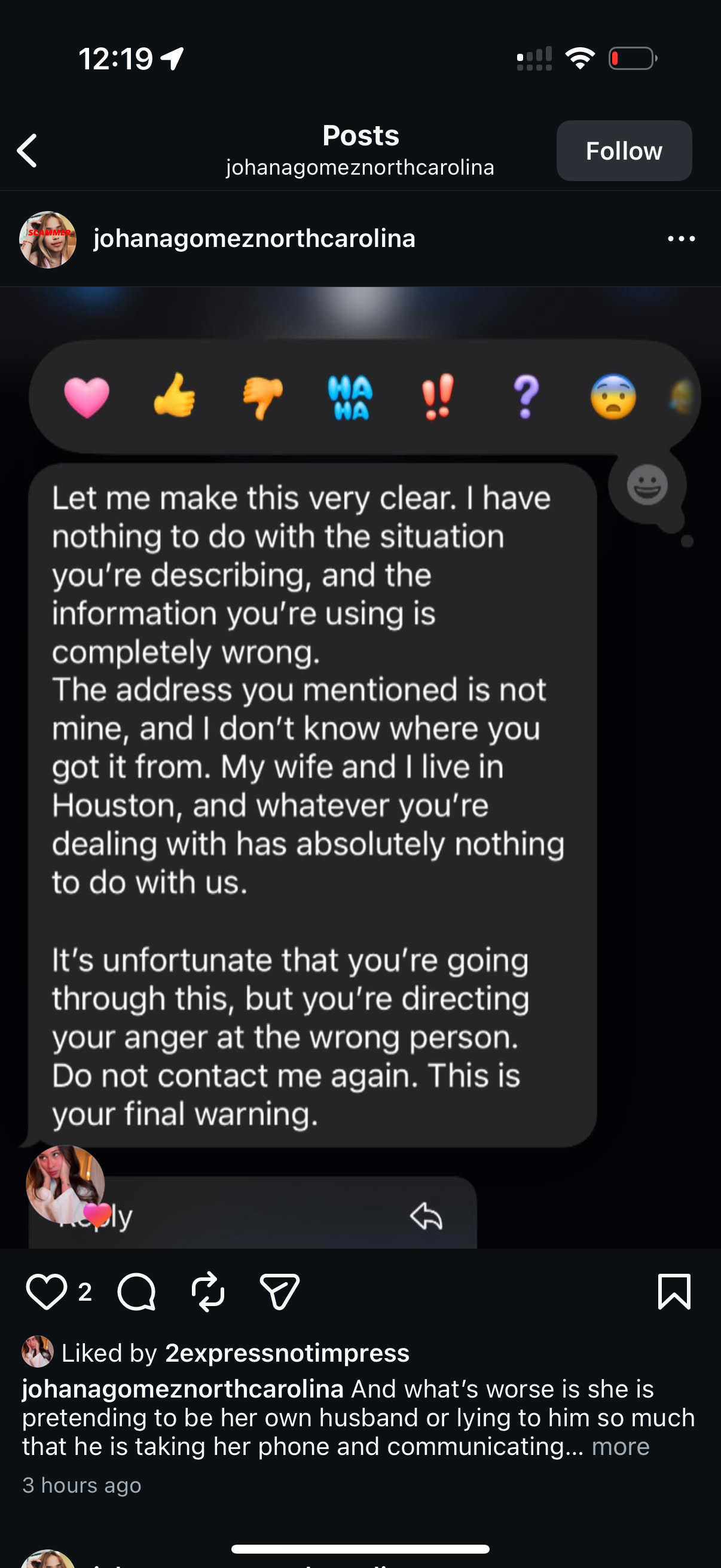
The so-called “husband” storyline is almost certainly fabricated.
These small operations often involve one or two partners who step in when control slips.
The sudden shift into clean, assertive English is not domestic drama — it’s a handler taking over the role. The mask changes depending on the leverage needed: bewildered wife, stern spouse, protective man.
It’s a two-person call center disguised as a household.
The real boyfriend — the man featured openly on her profile — is not part of the scam.
His quick disengagement reflects something else: familiarity with the fallout that surrounds this line of work, and an unwillingness to be pulled into it. His existence doesn’t legitimize the operation; it simply sits adjacent to it.
The money solicitation — thousands for a supposed emergency — matches the exact structure of Latin American and Caribbean online romance scams: emotional escalation → sudden crisis → urgent transfer → disappearance → slow re-entry when the mark weakens.
The crisis is always the same: car repairs, rent, surgery, a broken phone, a sick relative.
It’s not creativity; it’s a template.
Every persona visible in these exchanges — the innocent girl, the wronged wife, the frightened professional woman, the English-speaking man demanding answers — belongs to the same ecosystem.
They are modular identities, swapped in and out to maintain control or redirect suspicion.
And through all the shifting stories, one slip remains:
“Solo chats.”
The phrase no civilian uses, the phrase that exposes the tiered architecture beneath the conversation — the vocabulary of someone who categorizes intimacy for sale, tracks price points, and understands escalation protocols.
This is not a love triangle.
Not confusion.
Not a domestic dispute.
It is a small, low-tier digital sex-work scam — an operation built on attention, escalation, crisis, extraction, and reset, running with the same language that always betrays it.